- Brewing & Distilling
- Caffeine Free
- Culinary
- Fair Trade
- Medicinal
- Organic
- Sprouting Seeds
- Tisane
- Viable Seeds
- Wildcrafted
Free Shipping $49+
June Discount 10%
Black Tea
Our collection of loose leaf black teas includes single origin teas such as Darjeeling, Keemun, Ceylon, Assam & Yunnan as well as traditional black tea classics such as English Breakfast, Earl Grey and Irish Breakfast. Enjoy our selection of black teas and the many health benefits that comes with drinking black tea.
New to loose black tea? Try our Black Tea Sampler
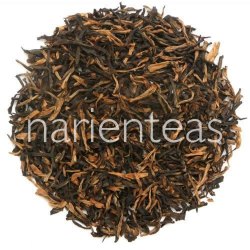
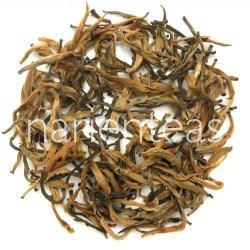
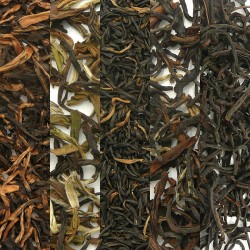
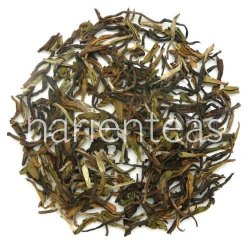
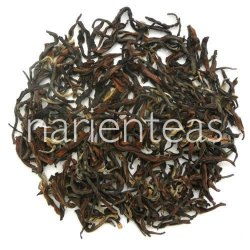
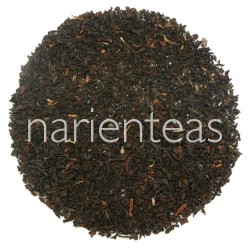
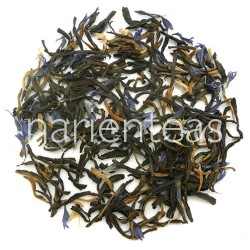
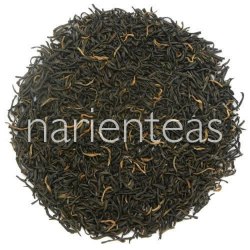
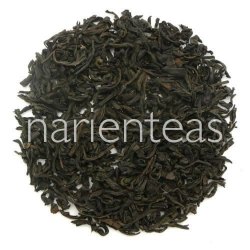
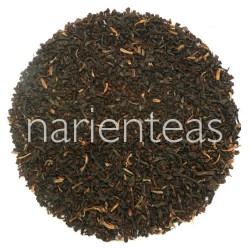
Black teas are more oxidized than oolong teas, green teas, and white tea varieties. This gives black tea it's stronger flavor and higher caffeine content.
Bracing. Bold. Hearty. These are some of the words often used to describe black tea. However, black teas are far more diverse in flavor and type than many realize. Their character differs depending upon where they are grown, how they are processed, and the ways in which they are brewed.
Black tea is a tea that is fully oxidized. Oxidation is the process that turns an apple brown when it is cut and exposed to air. With tea, it is the process that turns green tea leaves to a deep brown or black.
Black tea is the most popular form of tea outside of Asia. While this kind of tea is grown throughout the world, among the best known black tea producing regions are China, India, Sri Lanka, Kenya, Argentina, Indonesia, and Nepal.
Some black teas include many buds in addition to the leaves. The buds turn to a deep gold during oxidation giving a distinctive look to these teas.
Black Tea History
Until China's Ming Dynasty (1368 - 1644 AD), only green tea was produced and consumed. It was during this dynasty, however, that oxidation was discovered and the Chinese realized that it could completely change their tea production. While the tea makers considered this newly created tea fit only for "barbarian foreigners," it solved one of their major problems.
Green tea did not travel well over long distances and had the propensity to mold. When the tea was allowed to oxidize and then baked, the resulting leaf could retain its quality longer. This black tea was far more suitable for the lengthy transport to Tibet and Mongolia. This type of tea is now the most popular tea in most of the world beyond Asia.
Making Black Tea
Black tea is made in one of two ways: "orthodox" or "cut, tear, curl" (CTC). Orthodox processing relies much more heavily on manual work. CTC is done primarily by machine and creates finely chopped tea leaves.
Steps to black tea production:
- Plucking
- The tea leaves are removed from the bush. They are harvested by hand for orthodox teas and by machine for CTC.
- Sorting
- The leaves are separated by size.
- Cleaning
- Any twigs, stems, rocks, or broken leaves are removed.
- Withering
- The leaves are dried slightly. The moisture content of the leaf goes from 70-80% to 60-65%. This withering makes the leaf pliable so it won't break during the next steps.
- Rolling
- Orthodox teas are rolled while CTC teas are chopped then rolled.
- Oxidation
- The leaves are allowed to brown. CTC teas may be tumbled to encourage oxidation while orthodox teas may be rolled at intervals on a table. Chinese teas are oxidized very slowly, making them more mellow in flavor than Indian teas.
- Drying and cooling
- The vast majority of the moisture is removed. The final water content may be just 3%.
- Sorting and grading
- The final sorting is done and the tea is graded by size. Grading does not necessarily indicate quality. It communicates the size of the leaf.
Black Tea Grading
There are two different grading systems, depending upon whether you are considering whole leaf teas or broken leaf teas.
Whole leaf black tea grades:
- FOP
- Flowery Orange Pekoe - Bud and first two leaves
- GFOP
- Golden Flowery Orange Pekoe - FOP with golden tips (the ends of the buds)
- TGFOP
- Tippy Golden Flowery Orange Pekoe - FOP with many golden tips
- FTGFOP
- Finest Tippy Golden Flowery Orange Pekoe is considered the highest quality example of this type medium leaf tea
- SFTGFOP
- Special Finest Tippy Golden Flowery Orange Pekoe is considered the highest quality example of this smaller leaf tea
- OP
- Orange Pekoe - Long, pointed leaves (after the bud has opened) that are larger than FOP.
- Pekoe
- Shorter and coarser leaves than OP.
- Flowery Pekoe
- Leaves that are shorter and coarser than OP and are rolled.
- Souchong
- These large leaves are rolled lengthwise, creating coarse, ragged pieces.
Broken leaf black tea grades:
- GFBOP
- Golden Flowery Broken Orange Pekoe
- GBOP
- Golden Broken Orange Pekoe
- TGBOP
- Tippy Golden Broken Orange Pekoe
- TFBOP
- Tippy Flowery Broken Orange Pekoe
- TGFBOP
- Tippy Golden Flowery Broken Orange Pekoe
- FBOP
- Flowery Broken Orange Pekoe
- BOP
- Broken Orange Pekoe
- BP
- Broken Pekoe
- BPS
- Broken Pekoe Souchong
- Fannings/Dust
- finest siftings
Brewing Black Tea
Black teas are best brewed between 190-212 degrees F. Chinese and Indian blacks are best on the cooler end of the spectrum, while Sri Lankan, African, and black tea blends brew best at the higher temperatures.
Most black teas steep for 3-5 minutes using 1-2 tsp of leaf per 6 ounces of water. The finely chopped CTC teas and small leaf orthodox teas require only 1 tsp of leaf and might be brewed for 3 or even as little as 2 minutes. Leafy orthodox teas like our Assam Meleng can steep longer and more leaf should be used.
Black Tea Flavors
The flavor profile of black teas is broad. Lighter flavored blacks include Darjeelings and Nepali teas. Black teas can be malty like those from Assam. Ceylon teas tend to have more citrus notes. Keemuns have fruity qualities. Other black teas might be quite spicy like those from Yunnan.
The caffeine content of teas depends upon many factors: the cultivar of the tea plant, the age of the leaf being picked, and where on the stem the leaf is located, how long it is oxidized, leaf size, how much leaf is used, the temperature of brewing, and how long the tea steeps.
Studies have shown that one pound of tea leaves has more caffeine than one pound of coffee. However, it takes less tea than coffee to brew a cup. Therefore, there is actually 50 -65% less caffeine in a cup of tea than in a cup of coffee. Plus, the way the caffeine is absorbed is different. With tea, the caffeine is absorbed more gradually so you tend not to get the big caffeine burst nor the caffeine crash.
The hotter brewing temperatures and longer steep times of black tea likely causes more caffeine to be extracted than the brewing of some other types of tea. Black teas with many tips also have slightly higher caffeine content as new buds have a higher concentration of the chemical than older leaves.